
Inform. Educate. Inspire.

Sensory-room curation built around people

A sensory space starts with a practical question: what do the people using it need? We help organizations turn that question into a plan for the space, its furnishings, its sensory features, and how it will be used.
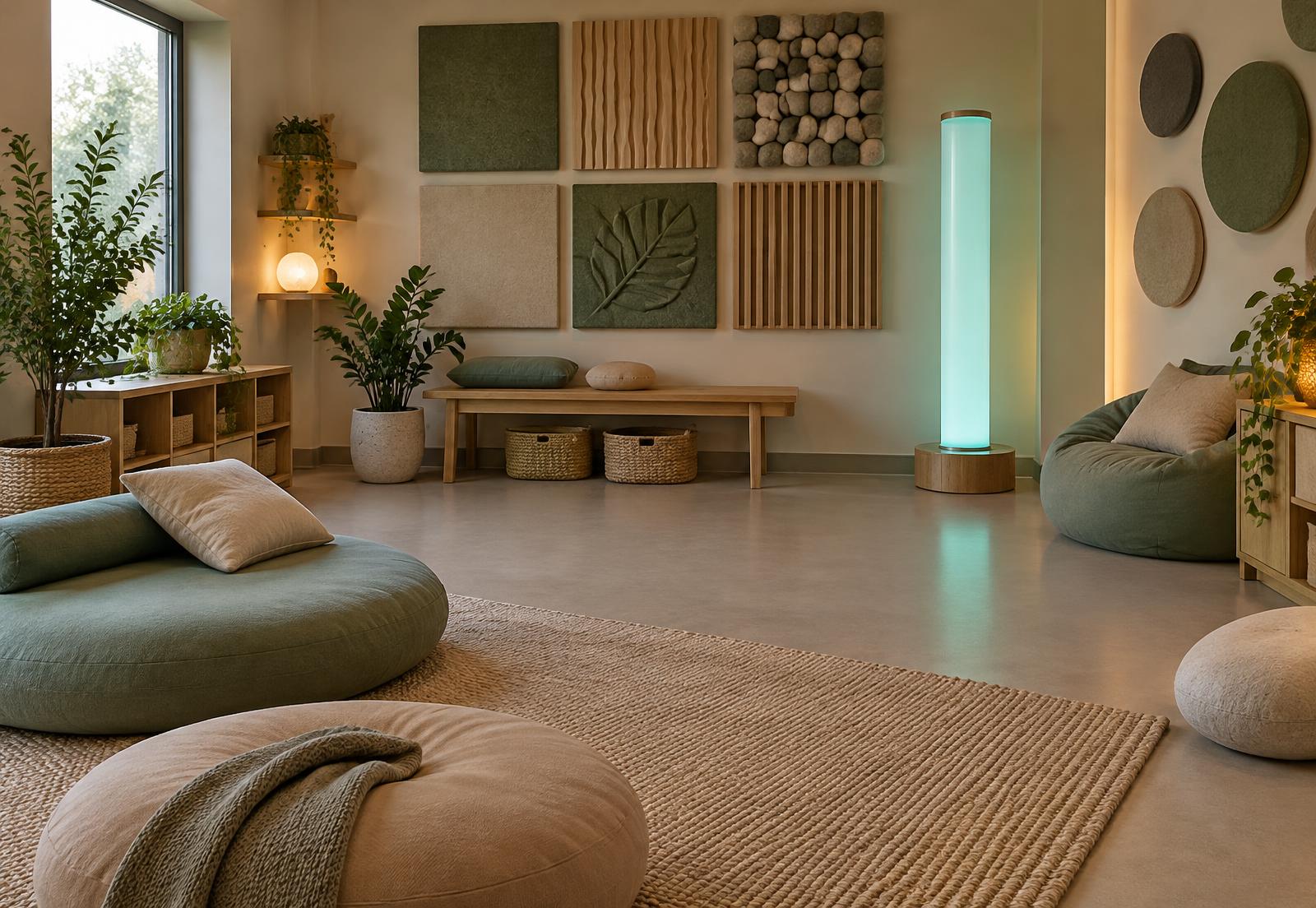
What sensory-room curation includes

Sensory-room curation brings the parts of a space together around its purpose. Depending on your project, our work can include:

Your proposal defines the deliverables, responsibilities, and support included in your project.

01

Discovery with the people responsible for the space and those who understand its intended users.

02

A site walkthrough or assessment of the available space.

03

Layout and zones for quiet, tactile engagement, movement, or focus as appropriate.

04

Accessibility considerations for routes, reach, seating, signage, and use.

05

Recommendations for lighting, sound, furnishings, and sensory tools.

06

Implementation planning, wayfinding, and simple instructions.

07

Setup support, operating guidance, and staff orientation when included in scope.

Choose a setting

Schools and education

Plan a dedicated room or a sensory corner within a shared classroom. We consider intended users, available space, supervision, transitions, and how sensory features may affect the surrounding learning environment.

Workplaces

Create a space employees can use for a quieter break. We consider how the room fits into the workday, how people find and use it, and what guidance supports consistent operation.

Government and community settings

Plan sensory spaces around the people using your facility or program. Clear routes, understandable signage, and practical operating guidance are part of the conversation.

Conferences and events

Bring sensory-space planning into the event experience. We consider location, layout, seating, sensory choices, wayfinding, and the support needed to operate the space during your event.

A plan that fits your starting point

You may have an empty room, a shared classroom corner, an existing sensory space, or an upcoming event. Tell us what you have and where you need support. We will discuss an appropriate scope, from planning and recommendations to curation and implementation support.

How we work

01

Understand the need

Understand the need: discuss the setting, intended users, purpose, and project constraints.

02

Plan the experience

Plan the experience: consider layout, sensory choices, accessibility, and how the space will operate.

03

Define the project

Define the project: agree on deliverables, responsibilities, timing, and investment.

04

Prepare for use

carry out the agreed design, curation, setup, or orientation work.

Designed for choices

People experience sensory input differently. The plan should offer appropriate choices and consider the needs of people using wheelchairs, crutches, or other mobility supports. In a shared classroom, we also consider how lighting, sound, and technology affect students outside the sensory corner.

What will your project cost?

The investment depends on the space, intended use, furnishings and tools, implementation needs, and the support included. Share your project details so we can discuss scope and prepare a quote. Designs and costs may change with product availability and confirmed room specifications.

Questions before you begin?

Visit our FAQs for answers about classroom corners, event spaces, project scope, and getting started.

Why AP Consulting ?

Tailored Solutions

Each program is customized to meet the specific needs of our clients.

Expert Guidance

Our coaches are industry leaders with years of experience.

Proven Results

We’ve helped public sectors, government agencies, and corporations achieve their goals.

Ready to get started? We are too

What Clients Say

Hear from those who’ve worked with us.

AP Consulting has transformed how we think about user experience. Building and organizing our team has improved our products and customer relations.

Corporate Client

The workshops are engaging and insightful. The workshops opened their eyes to how some of their favorite skills could be leveraged in tech—my students loved it!

High School Teacher

Many of our participants are college-bound. Learning about UX as a non-tech role opened their eyes to a host of possibilities and gave many who aren't tech savvy, hope.

Street Corner Resources